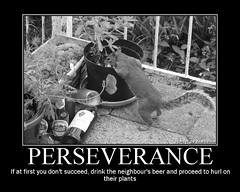
 You can find inspiration anywhere. Steve Pavlina, in his Skill article writes “During my first six months as a blogger, I earned a whopping $167. That’s about 17 cents per hour…But about a year and a half later, my blog’s income was passing $10K/month…” (his unreleased book has cracked Amazon’s Top 100 books). Not everyone is as successful as Steve but it’s goes to show that perseverance pays.
 photo credit: dearbarbie.
Category Archives: Principles
How To Prepare For Mother’s Day Now
 Mother’s day just ended so you’re probably wondering if this article is late. Actually it isn’t. It’s right on time- for next year. Did you rush at the last second to get your mom a present, make an acknowledgment or plan a visit? Did you feel stressed? Did you do your best? Probably not.
Do you go through the same unfortunate process for birthdays, anniversarys and other events? It’s time to put your best foot forward.
Think now. Think about what you did that worked and what you did that didn’t work. Think about what you should have done. Jot down a few notes about your thoughts. It doesn’t need to be a set of ideas or anything concrete but it needs to be coherent enough that it will jog your memory about your thoughts next time you read it.
Review Monthly. Set a reminder for each month during your monthly review (someday/maybe) to look over your notes. Each month take a couple of seconds to expand and organize your ideas. Some months you’ll have nothing new to add. Other months you’ll gain a clear focus on what you want to do.
Start Preparation. Two months before the event, finalize what you’re going to do based on your notes and set actions for yourself to do it with plenty of time to spare.
Post Event Review. After the next Mother’s Day (or birthday etc) review how it went and start preparing for next year.
Speaking of preparation: Mom, Happy Mother’s Day- I’m a year early.
photo credit: eyeliam
Lifestyle Investing: How to Compound Time
The most powerful force in the universe is compound interest
Albert Einstein
We all know about the power of compound interest (at least we should). Basically you take a few dollars and put it away for a few years and the interest you earn earns interest. Before you know it you have much more than you started with. Can you apply the same concept to time? That’s the question asked to Tim Ferriss of The Four Hour Workweek. Unfortunately he doesn’t provide an answer. But we all know the answer is obviously yes- investing is one of the principles of success. Here’s six ways to compound time:
Outsource
You don’t have to do everything yourself. Get rid of the easy tasks so someone else does it for you. Need someone to do payroll try a company like ADP then all you need to do is spend a couple of minutes sending them your data and they take care of the rest.
Delegate
Some tasks are too complex or personalized to outsource- instead you can insource it (delegate). Train someone to do your job inside your organization or family- a few minutes of training or direction can give you huge dividends in the long term. Sometimes just asking is all you need to do.
Automation
Invest a small amount of time to get a machine/computer to do your job for you. This is why I love computers. They have the potential to do exactly what you need you just have to tell it the right way. It may require a special program, a special setup or even some programming but if you find the right command your computer will do your work for you and will never complain.
Learning
Investing in learning time is crucial. Sometimes learning simple techniques can end up saving you much time in the long run. Learn how to type faster. Learn advanced features of your word processor. Just Learn.
Teaching
If you’re the guru in your house or your office, you’ll often get all kinds of requests- each of which takes you away from what you need to accomplish. The solution is to invest time to teach the person how to do it themselves. So go ahead: Teach your kids to pick their own close. Teach your coworker to run a report you created. As the saying goes “Give a man a fish; you have fed him for today. Teach a man to fish; and you have fed him for a lifetime.”
Systemize
When there is a system to your actions it makes it much easier to succeed. Think about a recipe- it tells you exactly what you need to do. For projects that you create look into making it systematic. It takes away complexity and limits the risk of problems.
With the Success Blueprint you’ll always know what you’re supposed to be doing and what needs to be done next. It’s a formula that helps you succeed. Your machine works for you invisibly even if you aren’t actively working on it.
This just shows the value of time don’t waste it. Do you have any techniques to compound time? Let me know below.
How To Be A Winner and Thanks For Making Me One
As I mentioned, I recently entered a contest at ChangeThis– whose “. My proposal “Stop Bring Productive, Start Being Successful” was selected to be voted on. The person with the most votes for their proposal gets their manifesto (long article) published. I was against 9 others with big ideas. Fortunately, with your help (Thank You) I won! The manifesto is coming soon. Here’s some of my take aways.
Think Like a Winner
Put your concerns aside and do your best. Confidence and determination are key. Think of a plan how to get success and do it.
Put Yourself in Position To Win
“You miss 100 percent of the shots you never take.”
Wayne Gretzky
If I had been intimidated by the other good ideas I wouldn’t have entered. As the lotto says- “you gotta be in it to win it” (not that I’m advocating playing the lotto). Take whatever cliche you want, the point is if you aren’t trying, you definitely wont win.
Look For Inspiration
By blog buddy Francis Wade of 2Time had entered a previous contest and won.
Ask for Help
You can’t win on your own. I asked Francis for some pointers. I asked my readers to vote. I asked my online buddies to vote. You all came through. Thanks.
Three Sure Fire Ways To Avoid Fire Drills
No ones likes the last minute rushing and headaches that comes with an urgent project. Seth Godin has an intriguing post Managing Urgencies. He concludes, “a career putting out fires never leads to the goal you had in mind all along”. This is exactly the reason to “Think” before you do. Here are three ways to avoid fire drills.
Focus on quality
1. Think in advance– Think about the right way to do it before you start any project.
2. Double check– Double check all your work before it goes out.
3. Audit– have an audit procedure to make sure you did it right.
Reign in expectations
1. Don’t over promise– Don’t commit the world if it’s not required. Know what you’re capable of. See what you have the time for and do your best.
2. Educate your customer– Let your customer, boss, spouse know how long tasks typically take so they can set their own proper expectations.
Control your time
1. Don’t overschedule– If you have too much going on you risk getting into a time crunch and startign a fire.
2. Don’t let others schedule for you– Don’t let others automatically schedule you. Sometimes it’s something they can do themselves- teach them how.
Make it your goal not to get in fire drills and you’ll be less stressed and more productive.
Don’t Drop The Ball and Other Life Lessons From Opening Day
Opening days marks the beginning of a new baseball season. There’s something special about opening day. You’ll want to make everyday opening day.
Fresh start
In a new season everyone has a fresh start. The bad teams can show that they’re better. The bench players can show they’ve improved and the rookies can show they belong. Unfortunately real life doesn’t offer us the opportunities to start fresh without dramatic change (switch jobs). The answer is to do something different. Launch something new. Give people the opportunity to show something new. Look at an old situation in a new way. Start a new tradition like going out to lunch with a coworker.
Don’t Drop The Ball
In baseball one of the fundamentals is that you don’t drop the ball. Most of the time you don’t have to do anything remarkable, as long as you do what your supposed. Part of what made Cal Ripken Jr. special is he showed up every day- ready to play. That’s 2,632 straight games without sitting. Today too many people are trying to do too much and don’t get the fundementals done. Keep track of your outstanding tasks and get them done and you’ll be ahead of most people.
Practice, Practice, Practice There’s an old joke of a man lost in New York City he asks a women “How do I get to Carnegie Hall?”. The reply was “Practice, practice, practice”. In order to do anything well we must practice, practice, practice. Players who have been playing baseball for their whole lives spend six weeks practicing before the season start. Then they practice all season. In the real world we need to constantly learn, to refine our skills. This may
Make this your opening day. Give yourself a fresh start to improve. Give your coworkers, subordinates, family member and friends a chance to surprise you. Forget the bad from the past. Even my favorite team can put the memory of a historic collapse behind them and start a new.
The Last Lecture on Time Management
Randy Pausch, a beloved college professor, is terminally ill with Pancreatic cancer. He wrote his “Last Lecture” entitled “Really Achieving Your Childhood Dreams”. Over six million people have viewed the lecture online. He went on Opera and delivered a shorter version. Pausch is really inspiring. Interestingly he’s more proud of his lecture Time Management. He even posted the power point slides. If anyone needs to manage time well he does.
He mentions lots of ideas that you’ve seen on these pages: start with a dream, make plans and turn it into to do items. Break your to dos down (next actions) and do the “ugliest” thing first (the hardest). Use Covey’s 4 quadrants: Do the “important, not due soon”. Keep an empty inbox. File everything away. Use 2 monitors.
He also has some not so obvious tips:
- On your desk have only one task in front of you- no distractions.
- Get a speaker phone- now you can be productive when on hold
- Telephone
- Keep calls short; stand during call
- Start by announcing goals for the call
- Don’t put your feet up
- Have something in view to do next
- Have an excuse ready to get off the phone. Prepare something fun to do after the call so you are motivated to finish quickly.
- Group calls: 11:30am (before lunch) and 4:30pm (before quitting time) so people will not stay on the phone long.
- Write hand written thank you notes
- Office Logistics- Make your office comfortable for you, and optionally comfortable for others
- Scheduling Yourself
- You don’t find time for important things, you make it
- Everything you do is an opportunity cost
- Learn to say “No”
And lots more. Watch the video: Time Management.
Want more success?
 Elections are just around the corner and whether your republican, democrat, independent, conservative, liberal or anything else the choice is clear- vote for my proposal: Stop Being Productive, Start Being Successful. Just click the vote link on that page.
I mentioned previously, I submitted a proposal to ChangeThis. If my proposal gets the most votes then they will distribute my manifesto (long article). Which means that you’ll get a quality(i hope) information on making yourself more successful. Here’s the text of my proposal:
Are you working harder and harder and becoming more “productive” yet you still feel like there’s much more to do with no end in sight? The problem is that productivity (doing something well) is only one of the three pillars of success. I will explain the other two pillars and show you how you can use a few easy steps to significantly increase your ability to succeed.
Voting ends on Sunday so vote now.
The Big Fat Productivity Curse
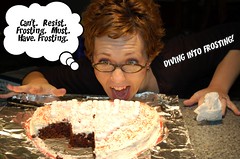
Being more productive has many advantages including getting more done and feeling empowered. But productivity on its own, can cause your belt to become less productive. You see there is no need for a belt when your stomach gets so big it can hold your pants without assistance. In fact, the more productive you become the more likely it is that you are getting fatter. Here’s five ways productivity can make you get fat and what you can do about it.
Too Efficient
Being productive can make you too efficient at getting the wrong things done. For example your to do list will work perfectly when you’re shopping- even when this means adding a “family size” bag of chips to go with the super-sized chocolate bar. You end up buying all the wrong things because you’re used to it and you’re good at it.
Solution: Take the bad foods off your list. Replace it with healthy (or at least healthier) alternatives. Avoid being in a position to see the “bad” items.
Work Long Hours
A strange phenomenon happens to productive people, they get more responsibility. More responsibility equals more work. Long sedentary hours especially when coupled with the lack of time to exercise leads to more weight.
Solution: Schedule breaks. Delegate: see if others can do some of your tasks(especially the ones you did before you got increased responsibility). Train others to do what you do- it’s worth the investment. Studies have shown that long hours lead to decreased mental function, so limit your work time. Use the extra time to do something fun and active.
Look to fill every second
Productive people don’t want to waste a second. You are always looking to use every minute of their time. So if you have an extra minute that may mean an downing an extra snack or treating yourself to a double moca latte.
Solution: Allow yourself time to soak in your surroundings and think. Thinking can lead to creative solutions. Let yourself unwind, being stressed can make you less productive.
Multitasking
Productive people look to save time – this includes doing two tasks at once aka multitasking. Sometimes people will combine food with another task- thinking they’re saving time. The problem is that they’re so busy doing the other task, like watching TV, they don’t realize they’re eating. Before they know it they have scarfed down a huge meal and they don’t even know what they ate.
Solution: Multitasking has been proven not to work, doing two tasks at once means one or both won’t get done well. Don’t multitask! You can combine tasks if you want though. Combining a task means that you’ll spend the right amount of time on each one- you are just doing them together. For example, you can schedule a meal with a friend- you’ll get your networking/socializing opportunity yet you wont be scarfing down the food. You’ll be eating at a reasonable pace and interacting- the best of both worlds.
Finish Everything
Productive people like to finish everything they start. That means that super-sized meal will be finished in no time even if it isn’t needed.
Solution: Stop yourself, realize food is not a task. Even simpler, take smaller portions.
Of course there’s more you can do to become leaner and healthier but frankly changing your approach is easier than dieting or exercising. Keep your eyes open and see where your habits are bringing you into bad situations. Then use your productivity skills to productively wipe it out.
Photo credit: Melting Mama
Vote For More Success
Recently I submitted a proposal to ChangeThis, a site (based on a tip from 2Time)Stop Being Productive and Start Being Successful.
Are you working harder and harder and becoming more “productive” yet you still feel like there’s much more to do with no end in sight? The problem is that productivity (doing something well) is only one of the three pillars of success. I will explain the other two pillars and show you how you can use a few easy steps to significantly increase your ability to succeed.
They have a voting process (everything is a reality show) and they will distribute the “manifesto”* of the winner. Please go to the site and vote for my idea.
What Will I Write
Readers of this site know the three pillars of success: Think, Do, Enjoy. I plan to expand on these concepts and explain how they can be used to enhance success.
What You Will Get
When my idea is selected (I’m thinking positive), you will be able to download the full document for free.
* Manifesto always reminds me of the unibomber. I promise no people will be harmed in the making my manifesto.